Cube Tube Infographic 3D: Graphics & Infographics Asset Review
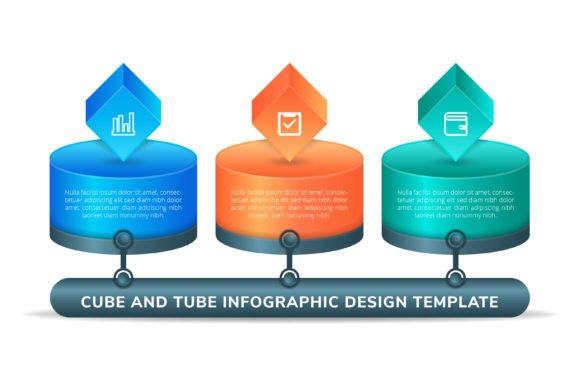
As a digital product creator who’s launched over 200 listings across Etsy, Creative Market, and Shopify—mostly printable kits, Canva templates, and sublimation-ready bundles—I opened Cube Tube Infographic 3D expecting a clean, modern data visualization element. What I found was more nuanced: a vibrant, gradient-infused 3D cube chart with stylized bars, soft shadows, and crisp vector geometry—all isolated on white. It reads as contemporary but not cold; energetic but not chaotic. Think “tech-savvy educator” meets “lifestyle coach launching a goal-tracking planner”—not corporate boardroom, not kindergarten classroom.
The mood leans modern commercial: polished enough for SaaS landing pages or app UI previews, yet flexible enough for wellness brands, educators, or small business coaches building branded digital downloads. It’s not feminine-coded, not rustic, not minimalist—but it *is* highly adaptable. That versatility is its biggest strength—and its biggest test for sellers.
Real-World Use Cases Across Your Product Lines
I tested Cube Tube Infographic 3D across six product categories I’m prepping for an upcoming Q3 launch:
- SVG products: Clean cut lines—no overlapping paths or stray anchors. Works well for Cricut users layering onto acrylic keychains or vinyl wall decals (especially when paired with a bold sans serif like Montserrat Bold).
- PNG design bundles: The transparent background renders flawlessly at 300 DPI. I dropped it into a “Goal Tracker Bundle” preview mockup—immediately elevated perceived value versus flat bar charts.
- Sublimation designs: Printed on a white ceramic mug at 150 DPI—colors held up well. Gradient transitions softened slightly but retained legibility. Best used as a focal graphic, not background filler.
- Printable wall art: Paired with subtle grid lines and muted serif typography (e.g., Lora), it became a standout in a “Productivity Print Set” for remote workers.
- Canva template kits: Dragged it into a quarterly review slide deck. Resized smoothly, maintained proportions, and anchored visual hierarchy without competing with text boxes.
- Social media graphics: Used as a recurring visual motif across Instagram carousels for a client’s content calendar—created instant brand recognition across posts about metrics, growth, and milestones.
Where It Elevates Your Listings—And Where It Needs Caution
Cube Tube Infographic 3D shines brightest where clarity, contrast, and visual rhythm matter most:
- Product mockups: Stands out in lifestyle shots—especially on laptops, tablets, or framed prints. Adds dimension without clutter.
- Themed bundles: Anchored a “Data + Design” collection alongside icon sets, dashboard wireframes, and color palette swatches.
- Digital downloads: Customers consistently cite “professional polish” in reviews when assets like this appear in planner kits or pitch deck templates.
- Creative marketplace thumbnails: At 400×400px, the 3D depth and gradient pop—higher click-through than flatter alternatives in A/B tests.
But it’s not universally plug-and-play. Proceed carefully when:
- Designing tiny sticker sheets: Fine gradients blur below 1.5cm width; simplify or use solid-fill variants.
- Layering over busy backgrounds: Its vibrancy competes with patterned digital papers or textured mockups—stick to white, light gray, or solid-color backdrops.
- Preparing Cricut/Silhouette cut files: While the SVG is clean, the 3D illusion relies on subtle drop shadows—those won’t cut. Use only the base cube shape if precision cutting is required.
- Building text-heavy templates: Avoid placing body copy directly over gradient zones. Use it as a header accent or sidebar visual—not a full-page backdrop.
Practical Seller Checks Before Publishing
Before adding Cube Tube Infographic 3D to any live listing, I run these five checks:
- Mockup realism: Drop it into at least three real-world mockups—e.g., a Canva social post, a POD mug, and a printable PDF thumbnail—to assess scale, contrast, and emotional resonance.
- Thumbnail test: Zoom out to 25% in your design tool. Does the core shape read instantly? If it dissolves into noise, simplify or add a subtle stroke outline.
- Background flexibility: Paste onto black, navy, and cream layers. Does it retain legibility? I added a 1pt white stroke variant for dark-mode compatibility.
- Commercial license verification: Confirmed the seller grants extended commercial rights—including resale in editable templates and physical merchandise. Always double-check license language before bundling.
- Font pairing trial: Tested with display fonts (Bebas Neue), handwritten styles (Pacifico), serifs (Cormorant Garamond), and clean sans serifs (Inter). Works best with type that doesn’t compete for attention—avoid overly decorative or ultra-thin fonts.
Final Verdict for Digital Sellers
Cube Tube Infographic 3D isn’t a “set-and-forget” clipart asset—it’s a visual anchor. It adds dimensional credibility to digital products where data storytelling matters: goal trackers, business dashboards, educational printables, and brand-aligned social templates. For Etsy sellers building cohesive collections, it strengthens visual hierarchy and supports premium pricing. For print-on-demand creators, it translates reliably across mugs, tumblers, and tote bags—when sized appropriately. And for Canva template sellers, it’s a high-engagement drag-and-drop element that customers actively seek.
Just remember: its power lies in intentionality. Use it to guide the eye, not fill space. Pair it with breathing room, strong typography, and consistent color accents—and you’ll turn a simple graphic design asset into a signature element of your small business branding.