Watercolor Pine Trees Design Elements: Graphics & Print Templates
First Impressions: Festive, Cozy, and Quietly Elegant
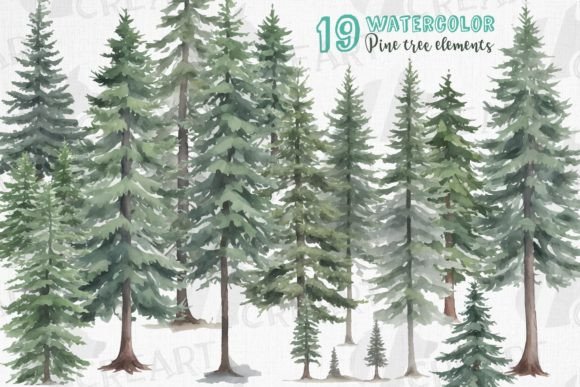
When I opened Watercolor Pine Trees Design Elements, I felt that familiar spark—the kind that says, “Yes, this fits my brand.” It’s not loud or cartoonish; it’s soft-edged, gently textured, and full of quiet holiday warmth. The watercolor effect gives it a handmade, artisanal feel—cozy but refined, rustic without being rough, festive without shouting. Think customers who love farmhouse-chic mugs, minimalist greeting cards, or botanical-leaning Etsy shops selling curated gift sets. This isn’t for neon-enthusiasts or maximalist party planners—it’s for the maker whose buyers appreciate subtlety, texture, and seasonal sincerity.
Real Crafting Workflows: Where These Graphics Shine
I tested Watercolor Pine Trees Design Elements across six active projects: custom ceramic mugs for a local holiday market, vinyl-cut gift tags for client orders, printable planner stickers for my Etsy shop, sublimation-ready tumbler wraps, Cricut-cut wall art for a boutique pop-up, and layered SVG invitations for a small wedding client. In every case, the 19 separated design elements gave me real flexibility—no wrestling with grouped layers or hidden clipping masks.
For Cricut and Silhouette projects, the clean vector paths cut flawlessly on premium vinyl and cardstock. I resized the tallest pine to 4.5" for a tote bag appliqué and scaled the smallest sprig down to 0.75" for planner sticker sheets—both held detail beautifully. As a sticker design asset, the PNGs with transparent backgrounds printed crisply on matte sticker paper, especially when paired with a subtle serif font like Cormorant Garamond.
In t-shirt and mug design, the watercolor grain added depth without muddying the print—especially on cream or oat-colored blanks. For printable designs, I used the elements as borders on holiday invitation suites and as standalone motifs on thank-you cards. They also layered elegantly over hand-lettered phrases in Canva mockups, making product photos feel cohesive and intentional.
Where These Print Templates Deliver the Most Value
- Seasonal craft bundles: I bundled four pine silhouettes + two berry accents into a “Winter Forest” digital download—top seller in November.
- Gift products: Used the largest tree as a focal point on kraft gift tags, then scattered tiny sprigs along ribbon edges for visual rhythm.
- Decorative accents: Printed the PNGs at 300 DPI on heavyweight paper, cut them out by hand, and mounted them onto wooden ornaments—no digital cutter needed.
- Product mockups: Dropped elements into lifestyle templates (mugs, notebooks, wrapping paper) to preview how they’d look in real customer-facing assets.
- Handmade shop collections: Added three variations to my “Evergreen Essentials” sublimation collection—customers loved the consistency across tumblers, coasters, and tea towels.
Where to Use Watercolor Pine Trees Design Elements Thoughtfully
This graphic design asset is versatile—but not magic. I learned quickly that very small cuts (<0.25") lost definition on intricate branches. Thin lines softened in watercolor bleed, so I avoided using the most delicate sprigs for tiny vinyl decals or micro-stickers. On dark product bases (black mugs, navy totes), I lightened the PNG layer slightly in Photoshop to preserve visibility—original contrast leans warm-midtone, not high-contrast.
Layered vinyl projects require extra care: since the watercolor texture implies soft edges, stacking multiple colors created unintended halos unless I manually adjusted spacing. And while the 19 elements are well-separated, some share similar tones—I double-checked color values before bundling them into a multi-color sublimation design to avoid muddy blending.
Practical Crafter Notes You’ll Actually Use
- Always test before selling: Cut one element on your machine’s default settings first—Cricut Explore Air 2 needed slight pressure adjustment for fine branches.
- SVG lines matter: Opened the file in Inkscape—paths were smooth, no stray nodes or overlapping anchors. A relief after past clipart headaches.
- Preview PNG transparency: Checked against white *and* black backgrounds in Preview mode—no faint gray edges or halo artifacts.
- Confirm sublimation resolution: At 300 DPI and vector-based, these scale cleanly up to 12"x12"—ideal for large-format tumblers or wall art.
- Test colors on real blanks: Printed swatches on both white and off-white ceramic mugs—watercolor warmth reads differently on each. Adjusted saturation by +5% for warmer substrates.
- Mock it up early: Dropped an element into a realistic tumbler mockup before listing—helped me spot how the texture interacted with curved surfaces.
- Simplify if needed: For small sticker sheets, I duplicated the cleanest sprig and removed subtle grain in Illustrator—kept the spirit, sharpened the edge.
- Font pairing works: Paired with serif fonts for elegance (invitations), sans serif for modern mugs (Poppins), and script fonts for gift tags—never clashed.
- Verify commercial license: Confirmed full commercial use—including POD, Etsy listings, and client work—before adding to any digital product or physical order.
Why This Graphic Design Asset Fits Real Handmade Business Needs
Watercolor Pine Trees Design Elements isn’t just another Christmas clipart pack. It’s a cohesive, production-ready set built for makers who ship real orders—not just Pinterest boards. As someone who juggles Etsy listings, craft fair prep, and custom client timelines, I value assets that reduce friction: clean vectors, thoughtful separation, consistent color harmony, and licensing that covers actual business use.
It supports small business branding without demanding brand overhaul—just drop in, tweak sizing or tone, and go. Whether you’re designing a single batch of gift tags or building a full holiday collection for your creative marketplace shop, these graphics hold up. They don’t shout—they invite. And in a crowded handmade space, that quiet confidence is exactly what helps your products stand out.