Grunge Geometric Seamless Pattern
First Impressions: Raw, Rhythmic, and Ready for Texture
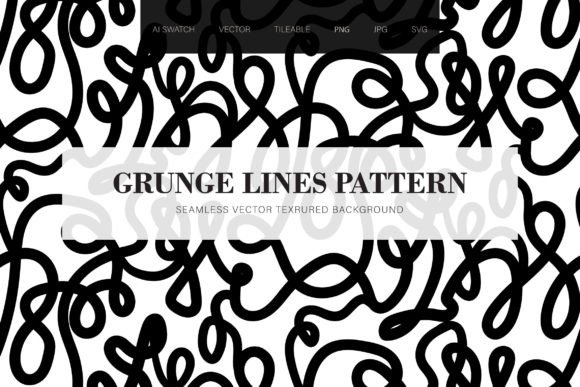
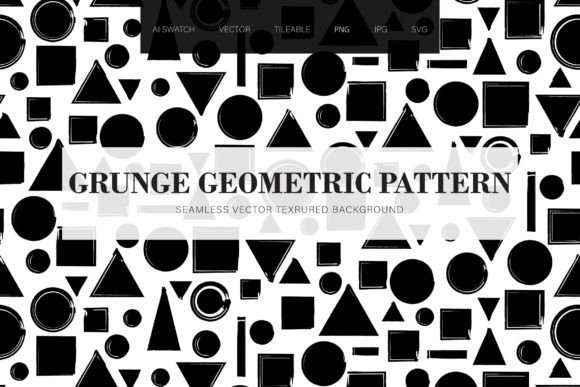
When I opened Grunge Geometric Seamless Pattern, I didn’t see a static graphic—I saw movement. The black brush marks feel hand-pulled, slightly uneven, with organic gaps between the Memphis-style spots and angular fragments. It’s not sterile vector perfection; it’s intentional imperfection—gritty but controlled. That duality is exactly what makes it compelling for embroidery. As a designer who’s stitched hundreds of patterns onto everything from linen tea towels to baby onesies, I immediately pictured how those brushstroke shapes would translate in thread: soft charcoal grays against oatmeal cotton, or stark black on heather grey sweatshirt fleece.
A Real Project Test: Embroidering a Boutique Tote Bag
Last week, I prepped a limited-run embroidered tote for my local maker boutique—natural canvas, medium-weight, no stretch. I chose Grunge Geometric Seamless Pattern as a subtle all-over background behind a small monogrammed initial. Not as a full-coverage fill, but as a 3-inch repeat band along the bottom hem. Why? Because its spotty rhythm adds visual interest without competing. In stitch, the pattern held up beautifully: the larger brush-formed shapes translated cleanly in satin stitch, while the smaller “spotty” elements worked best as low-density fill stitch—just enough texture to catch light, not so dense that it stiffened the fabric.
Where It Shines (and Where It Needs Caution)
- Custom apparel: Works exceptionally well on sweatshirts and relaxed-fit tees—especially when used as a tonal accent, not a dominant motif. The grunge edge feels fashion-forward but not fleeting.
- Tote bags & aprons: Its seamless repeat means no awkward seams across straps or pockets. On structured canvas, it reads as artisanal, not digital.
- Patches & pillow covers: At 4–5 inches wide, the pattern scales elegantly. I ran a test patch on twill-backed felt—clean edges, no fraying at the spot boundaries.
- Baby items & nursery decor: Use with restraint. On a muslin swaddle or organic cotton bib, tone down density and avoid tiny inner details—opt for simplified repeats instead of max-detail versions.
- Holiday & wedding gifts: Surprisingly versatile. Paired with a minimalist script name or date, it grounds festive embroidery with quiet sophistication—think charcoal thread on ivory linen napkins.
Fabric & Function: What You Must Check Before Stitching
This isn’t a “drop-in-and-stitch” design—it asks for thoughtful pairing. On thin or stretchy fabrics like jersey or rayon challis, the open negative space in Grunge Geometric Seamless Pattern can cause puckering if stabilizer isn’t layered correctly. I recommend tear-away + cut-away combo for knits, and always baste first. On dark fabric? Test contrast aggressively. Black-on-black won’t read. Switch to charcoal gray or deep navy thread—or reverse the motif digitally and stitch white-on-black for crisp definition.
Curved surfaces like caps demand simplification. I reduced the pattern’s repeat scale by 30% and removed two of the smallest spot clusters before digitizing for a dad cap project. The result was cohesive, breathable, and fully wearable—not a stiff, overworked crown.
Design Integrity in the Handmade Economy
As an Etsy seller and craft fair vendor, I know buyers don’t just buy thread and fabric—they buy intention. Grunge Geometric Seamless Pattern supports that narrative. Its handmade aesthetic (brush + paper origin) translates directly into perceived value: customers recognize authenticity in the irregular spacing, the slight taper on stroke ends, the way spots vary subtly in size. That builds trust faster than a perfectly symmetrical geometric repeat ever could.
But authenticity doesn’t excuse oversight. When listing this as part of a digital embroidery file bundle or using it in a commercial embroidery project, verify licensing terms. Some Memphis-inspired assets restrict resale of finished physical goods unless you hold extended rights. If you’re selling embroidered kitchen towels or personalized gifts, confirm whether the original license permits that use—don’t assume.
Practical Designer Notes (From My Hoop to Yours)
- Always test Grunge Geometric Seamless Pattern on scrap fabric matching your final product’s weight and weave.
- Check thread color contrast in both natural and artificial light—especially for baby embroidery or holiday gifts where softness matters.
- Review stitch density: high-density fills will mute the grunge texture; aim for 70–85% density for breathability and drape.
- Confirm hoop size compatibility early—this pattern works best in 4x4" and larger hoops. Avoid cramming it into a 3x3" without simplifying first.
- Inspect small details under magnification: some brush-tip ends may digitize as fragile single stitches—reinforce with a running stitch outline if needed.
- Test black-and-white mockups before finalizing. Does the pattern retain hierarchy and rhythm without color cues?
- Compare performance on light vs. dark backgrounds—what reads as moody on charcoal may vanish on cream.
- Use appropriate stabilizer: cut-away for knits, tear-away for stable wovens, and lightweight fusible for delicate linens.
- Ask yourself: does this serve the product—or distract from it? Grunge Geometric Seamless Pattern excels as supporting texture, not center stage.
Final Thought: A Quietly Confident Design Choice
This isn’t a flashy trend piece. It’s a grounded, repeatable asset—one that elevates a simple tote bag into something gallery-worthy, gives a custom sweatshirt quiet confidence, and turns a plain tea towel into a conversation starter. For embroidery designers, small shop owners, and makers building recognizable brands, Grunge Geometric Seamless Pattern offers real utility: it’s flexible enough for personalization, sturdy enough for production, and distinctive enough to stand out in a crowded digital marketplace. Just remember—the best results come not from speed, but from slowing down long enough to ask: What does this pattern need from me—and what will it give back to the person holding the finished product?