Halloween Spider Web Countdown SVG: Graphics for Crafts & Local Branding
As a brand designer who’s helped over 70 local businesses—from artisanal candle makers in Asheville to seasonal bakery pop-ups in Portland—I opened the Halloween Spider Web Countdown SVG with a very specific question: “Does this elevate *real* small business branding, or just add decorative clutter?” The answer? It’s a strong, versatile graphic design asset—when used intentionally.
A First Impression That Sets the Seasonal Tone
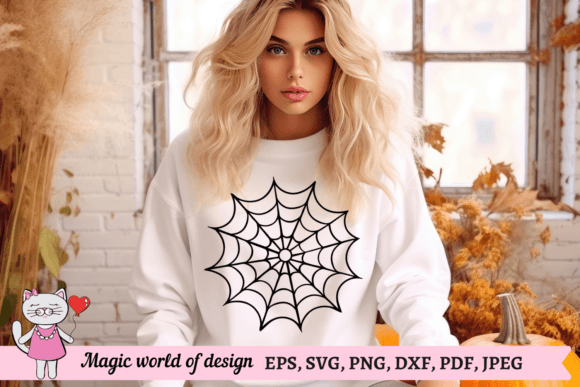
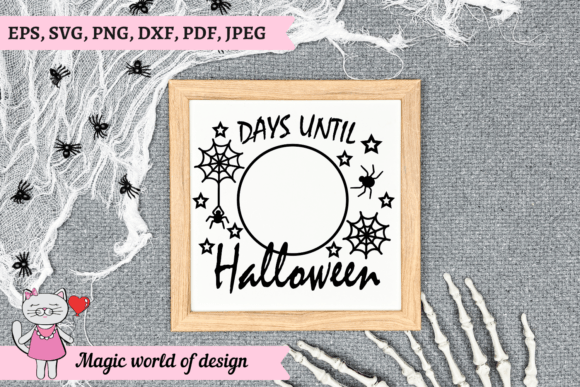
The design lands as delightfully spooky but not scary—think delicate webbing with subtle asymmetry, fine linework, and balanced negative space. It leans into playful elegance rather than cartoonish chaos. For a local business, that means it supports brands that want to feel festive *and* intentional: a lavender-infused soap line launching limited-edition Halloween bars, a children’s boutique curating themed gift boxes, or a coffee roaster rolling out “Pumpkin Spice Countdown” bags. It reads handmade, slightly vintage, and warmly inclusive—not mass-produced or overly commercial. That nuance matters. In a crowded marketplace, mood consistency builds trust before a single word is read.
Where This Graphic Design Asset Earns Its Keep
This isn’t just clipart—it’s a functional piece of brand infrastructure. Here’s where it delivers measurable value across real local business use cases:
- Product labels & packaging accents: Layered behind a clear label on a 4 oz soy candle jar, the web adds texture without obscuring key info. On kraft paper soap tags, it frames product names with seasonal charm.
- Seasonal campaign visuals: Used as a repeating border on printable “10 Days Until Halloween” posters for a florist’s window display—or scaled large as a hero graphic on an Instagram Story countdown series.
- Thank-you cards & hang tags: Paired with a simple serif font and brand color (e.g., deep burgundy + cream), it transforms a basic card into a tactile brand moment customers keep.
- Social media graphics: The SVG and PNG files integrate cleanly into Canva templates for consistent Stories, Reels thumbnails, and email headers—no pixelation, no awkward resizing.
- Product mockups: Because the files include SVG, EPS, and high-res 300 dpi PNG/JPEG/PDF/DXF, I dropped it instantly onto realistic bag, jar, and sticker mockups—no tracing, no guesswork.
How It Strengthens Local Business Presentation
Small businesses compete on perception as much as product. This graphic design asset helps close the gap between “local” and “professionally branded.” When applied thoughtfully, it contributes directly to:
- Stronger first impression: A cohesive Halloween visual language tells customers you’ve invested in your story—not just your inventory.
- Better shelf appeal: On crowded farmers’ market tables or boutique shelves, subtle web detailing creates visual rhythm that draws the eye—and holds it.
- Clearer visual hierarchy: Used as a frame or background element, it pushes core messaging (product name, flavor, call-to-action) forward—not backward.
- More consistent brand identity: Whether printed on a label, screen-printed on a tote, or animated in a promo video, the vector scalability ensures fidelity across touchpoints.
- Improved customer trust: Polished, intentional design signals care—even in seasonal work. Customers assume quality extends beyond aesthetics.
Smart Usage Boundaries for Real-World Projects
Not every context benefits from web motifs. Use caution when:
- Designing ingredient-heavy food labels—fine linework can compete with dense regulatory text.
- Applying to ultra-minimalist luxury brands (e.g., a high-end skincare line)—the decorative nature may dilute perceived premium positioning.
- Placing on low-contrast backgrounds (e.g., light gray web on beige kraft paper)—always test print proofs; subtle details vanish without contrast.
- Fitting onto tiny spaces like 1” x 1” sticker seals—preview at actual size. Some web nodes shrink into indistinct blobs.
- Integrating into formal corporate branding—this is crafted for warmth and seasonality, not boardroom presentations.
Practical Brand Designer Notes You’ll Actually Use
Before locking this into your final files, do these five checks—each rooted in real client project hiccups I’ve resolved:
- Test on real packaging mockups—not just digital previews. Print a sample label at 100% scale and hold it beside your actual jar or box.
- Check black-and-white usage—many local printers default to grayscale for cost savings. Does the web retain clarity without color?
- Preview alongside your brand fonts—try it beside a bold sans (for modernity), a delicate script (for handmade softness), and a sturdy serif (for tradition). See where hierarchy stays intact.
- Verify SVG editability—open the vector file in Illustrator or Affinity Designer. Can you easily isolate strands, recolor paths, or simplify nodes for smaller applications?
- Confirm commercial license scope—this is critical for client work. Ensure the license permits physical product sales (e.g., printed labels on candles), digital distribution (e.g., social media assets), and resale in bundled design kits—if that’s part of your service model.
The files included in this digital download are a zip file containing the SVG, PNG, EPS, DXF, PDF, JPEG—all at high resolution 300 dpi. As a digital product, it’s instantly deployable across packaging design, social media graphics, marketing visuals, and printable design needs. But its real power emerges only when treated as part of a strategic brand identity—not just seasonal decoration. For local business owners, handmade sellers, and creative entrepreneurs building authentic connections, the Halloween Spider Web Countdown SVG is more than graphics for crafts. It’s a tool for intentionality, cohesion, and quiet professionalism—right when your customers are paying closest attention.