Semi Circle Arc: A Designer’s Real-World Embroidery Review
First Impression: Soft Geometry, Quiet Confidence
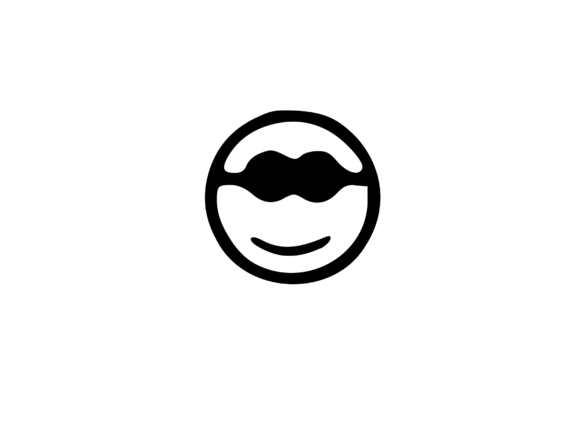
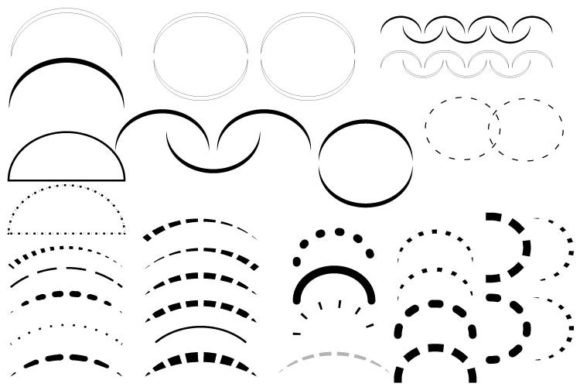
Opening the Semi Circle Arc collection, I didn’t see “trendy” — I saw intentional. These aren’t aggressive arcs or sharp vector flourishes. They’re gentle, balanced, and just slightly imperfect — like a hand-drawn compass line softened by time. The mood is calm but not cold: thoughtful, minimalist, and quietly versatile. As a designer who’s stitched hundreds of client projects, I immediately pictured them on a linen tea towel folded neatly in a boutique, or as a subtle accent along the hem of a baby romper. They don’t shout — they settle in. That’s rare in web elements meant for embroidery, where many icons sacrifice stitchability for visual flair.
Real Project Test: The Custom Linen Tote Bag
Last week, I used three Semi Circle Arc icons (a vertical arc, a horizontal arc, and a mirrored pair) to embroider a set of small-batch linen tote bags for a local herbalist. The goal was branding that felt grounded, not graphic-heavy — something that whispered “handmade care,” not “digital download.” I placed one arc at the lower left corner of each bag, 1.25" tall, using matte cotton thread on natural unbleached linen. The result? Crisp, breathable, and deeply tactile. No puckering. No lost detail. The arcs held their shape beautifully across the fabric’s subtle slub — proof that Semi Circle Arc respects texture instead of fighting it.
Where It Shines (and Where to Pause)
Semi Circle Arc works especially well for:
- Custom apparel — Think sweatshirt cuffs, t-shirt hems, or cap brims where a soft curve echoes the body’s natural lines;
- Baby embroidery — Gentle arcs feel nurturing on onesies, burp cloths, or nursery pillows without overwhelming delicate scale;
- Embroidered patch design — The clean outlines and open negative space make these ideal base shapes for layered applique or satin-stitched borders;
- Holiday embroidery — Paired with simple stars or sprigs, arcs become elegant wreath frames or minimalist crescent motifs for winter or spring collections;
- Small shop product — As subtle branding on aprons, kitchen towels, or ceramic gift tags, they add cohesion without cluttering the handmade product.
But here’s where attention matters: avoid placing the smallest arcs (under 0.75") on highly textured fabrics like bouclé or thick terry cloth — fine curves can blur in dense pile. On stretchy fabric like ribbed knit tees, use cutaway stabilizer and test stitch density first; too much fill stitch near the arc’s terminus can cause distortion. And on dark fabric? Run a black-and-white mockup — some arcs rely on subtle contrast between stroke weight and background, so verify readability before final hooping.
What It Adds — Beyond the Stitch
Semi Circle Arc doesn’t just decorate — it elevates perception. When customers see that kind of considered shape on a personalized gift or custom apparel, they register craftsmanship, not just convenience. It signals that the maker paused to choose something intentional, not default. For Etsy sellers and craft fair vendors, that quiet distinction builds trust faster than any tagline. Visually, it supports brand consistency across digital embroidery files and physical finished products — whether you’re showing a printable mockup online or stitching a real embroidered patch. And because the arcs are modular (vertical, horizontal, mirrored), you can build rhythm across product lines: same shape, different orientation, unified voice.
Practical Notes from the Hoop
Before stitching your first Semi Circle Arc into a commercial embroidery project, do this:
- Test on scrap fabric — especially if using thin fabric (like rayon challis) or curved surfaces (caps, sleeves); arcs behave differently under tension;
- Check thread color contrast — these designs rely on shape clarity, not boldness, so low-contrast combos (e.g., light grey on oatmeal linen) can fade visually;
- Review stitch density — since Semi Circle Arc is delivered as SVG and PNG files, confirm your digitizer adjusts fill stitch spacing for your fabric type — dense fills risk stiffness on lightweight garments;
- Confirm hoop size compatibility — some arcs span wider than expected; measure your largest arc against your standard hoop before batching;
- Inspect small details — zoom in on SVG files for crisp endpoints; ragged vector tips won’t translate cleanly to satin stitch;
- Try black-and-white mockups — this reveals how the arcs hold up on both light and dark backgrounds, critical for product photos;
- Use proper stabilizer — medium-weight cutaway for stable fabrics, tear-away for stable wovens, and adhesive + cutaway for knits;
- Verify licensing — while the description says “Can be used in business designs,” always confirm commercial use rights for your specific application, especially when selling finished products or digital embroidery files.
Final Thought: Not Just Web Elements — Design Anchors
Semi Circle Arc isn’t flashy. It won’t go viral on Pinterest for its novelty. But as a graphics set built for real embroidery work — not just screen display — it earns respect. It bridges digital precision and textile honesty. Whether you’re an apparel decorator building a cohesive line, a hobbyist stitching holiday gifts, or a small shop owner curating design assets that reflect care over speed, Semi Circle Arc gives you room to breathe, shape to trust, and subtlety that lasts longer than a trend. In a world of oversaturated clipart, that’s not just useful — it’s quietly essential.