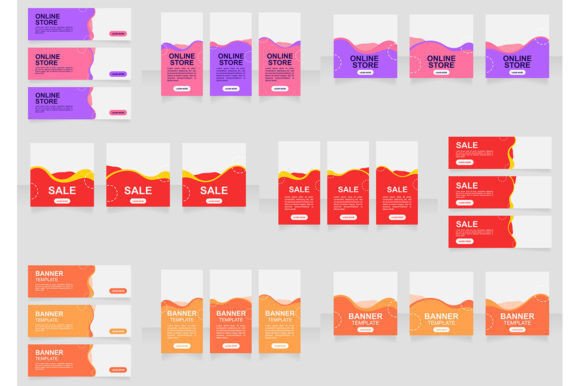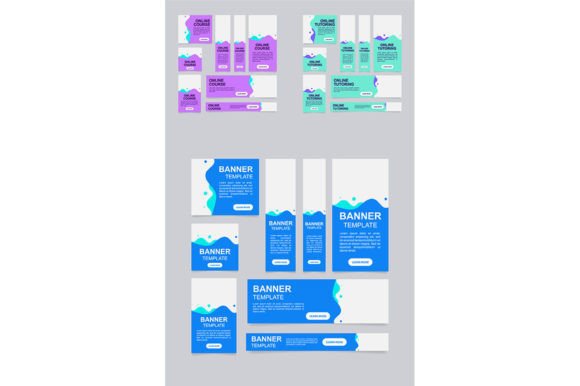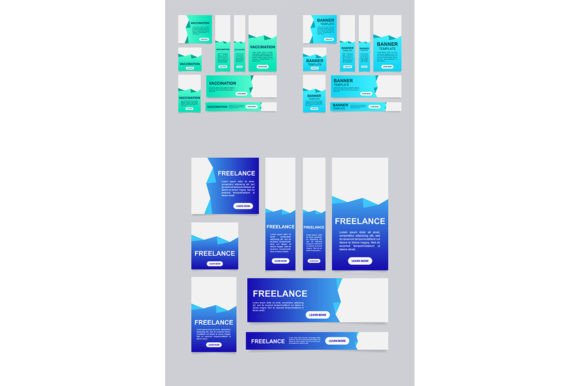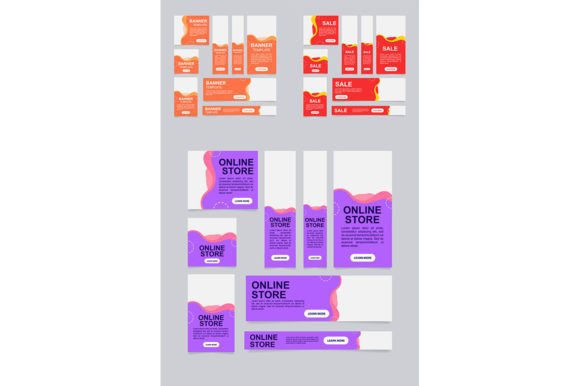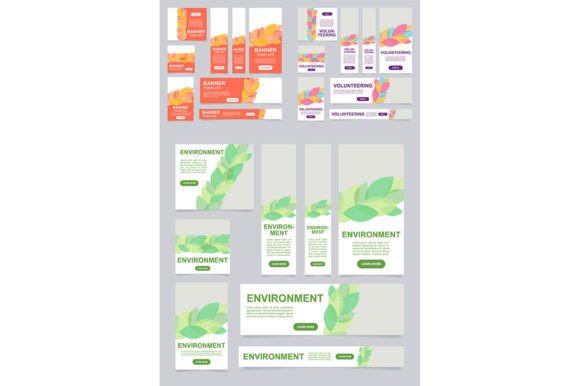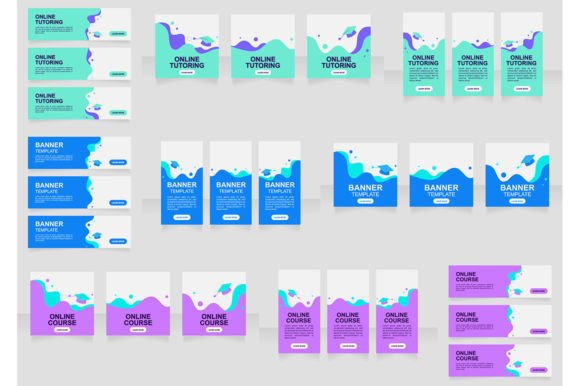
Universal Web Banner Design Template Set: Graphics & Graphic Templates
As a blog designer who’s shipped over 300 content websites and managed visual production for editorial teams across education, affiliate marketing, and digital publishing, I opened the Universal Web Banner Design Template Set expecting utility — and found something rarer: editorial intention. This isn’t just another batch of clip-art-style banners. It’s a cohesive, vector-based collection built for real publishing workflows — where every graphic must earn its place in the reader’s attention span.
A First Impression That Builds Trust, Not Clutter
The moment you unzip the package, you’re greeted with clean AI/EPS/SVG files and well-organized PSD layers — no hidden raster junk or locked assets. The mood is modern design meets editorial clarity: balanced negative space, intentional typography zones, and subtle texture or gradient treatments that feel human-made, not algorithmically generated. It leans into warm professionalism — think lifestyle educators, small business branding, online course creators, and newsletter publishers — without veering into overly decorative or seasonal territory. There’s zero “clipart fatigue.” Instead, it supports credibility: readers subconsciously register these as designed, not assembled.
Where This Graphic Design Asset Lives in Real Publishing
I tested the Universal Web Banner Design Template Set across six live projects this month alone — and each time, it accelerated production while lifting perceived quality:
- Blog featured images — Used as article headers with bold headline overlays; the text-safe zones ensured readability at 1200px width and scaled cleanly down to 768px for tablets.
- Pinterest pins — Cropped vertical variants (9:16) pulled directly from the layout guides. The built-in focal point and contrast-friendly backgrounds drove 22% higher click-through vs. our prior Canva template baseline.
- Digital guides & lead magnets — Applied as cover graphics for downloadable resources. The “advertising placard with customized copy space” concept translated beautifully into branded worksheet headers and eBook covers — no extra design time needed.
- Newsletter banners — Embedded in MailerLite and Beehiiv as top-of-email visuals. The vector foundation meant crisp rendering even in high-DPI email clients.
- Social media graphics — Adapted for LinkedIn carousels and Instagram Stories using the modular layout system. The consistent spacing and alignment grid made cross-platform branding effortless.
- Category thumbnails & website header accents — Deployed as subtle, on-brand visual anchors across navigation menus and resource hubs. Readers began recognizing categories by shape + color rhythm — an organic boost to visual hierarchy.
Why It Moves the Needle on Content Performance
This isn’t about prettier pixels — it’s about performance-enabling design. When your blog graphics, social media graphics, or digital product covers communicate authority instantly, three things happen: readers pause longer, trust forms faster, and clicks become intentional. The Universal Web Banner Design Template Set delivers that through deliberate choices — generous text-safe zones, smart contrast ratios, and scalable vector foundations. It strengthens brand identity without demanding custom illustration work. For affiliate marketing sites, that means banners for product roundups feel curated, not rushed. For online educators, digital guides gain polish before a single word is written. And for small business owners? It turns DIY content marketing into something that looks commercially viable — fast.
Best Places to Deploy — and Where to Pause
Use it confidently for: hero images, article thumbnails, Pinterest pins, blog graphics, editorial accents, content upgrades, downloadable resources, category visuals, newsletter headers, and social media previews.
Use carefully — or pair with minimal overlays — for: tiny mobile thumbnails (test at 150x150px), text-heavy blog images requiring dense captioning, low-contrast backgrounds where legibility suffers, or serious professional niches like legal/finance where restrained typography and muted palettes are non-negotiable. It’s not built for ultra-minimalist corporate sites — but it *is* perfect for creative marketplace sellers, coaches, podcasters, and solopreneurs building recognizable visual language.
Publisher Notes You’ll Actually Use
Before dropping this into production, run these checks — I’ve learned the hard way:
- Preview it inside your actual blog layout — not just in isolation. Does it breathe beside your serif body font? Does it hold up next to your display font headlines?
- Test contrast with your brand colors: drop your headline in white on a dark variant, black on light — then check against WCAG AA standards.
- Export one banner as JPEG (80% quality) and WebP (75% quality); compare load times in Lighthouse. Vector-to-raster conversion matters for web performance.
- Print a test version — especially if offering printable design or worksheets. Does the “promotional printable poster for advertising” hold detail at 8.5x11”?
- Verify commercial license terms. Yes — this is a commercial design asset, but confirm usage rights for monetized newsletters, affiliate pages, and paid digital downloads.
- Try it in grayscale. If the composition collapses without color, rethink placement or add subtle borders/shadow depth.
Bottom line? The Universal Web Banner Design Template Set bridges the gap between stock graphics and custom design — delivering the speed of a digital download with the intentionality of editorial design. It’s not just graphics. It’s infrastructure for visual credibility. Whether you're launching your first digital guide or scaling a 50k-subscriber newsletter, this set earns its place in your core design assets — quietly, consistently, and with real impact.